
Whether we log this under foreshadowing or a poetic loop is perhaps for film professors to decide. What we can say is we didn't catch this display of screenwriting prowess the first time we viewed "Looper." First off, it's necessary for us to understand just how dangerous it is to "let your loop run," which is when a looper lets their future self go instead of killing them. We see the deadly repercussions of this faux pas when Joe's friend Seth (Paul Dano) allows his own loop to run and hides out at Joe's apartment.
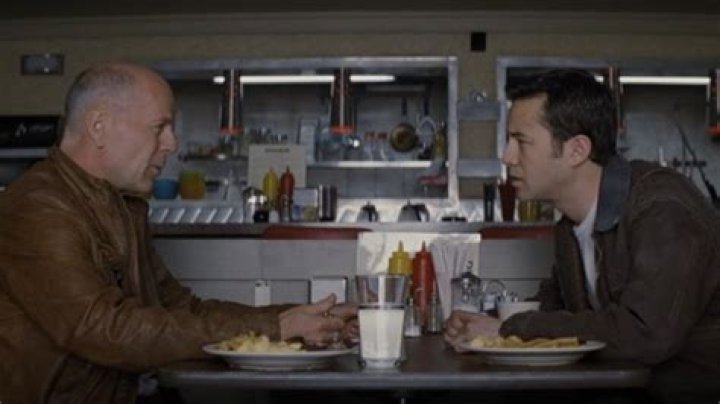
Joe promises to keep him safe, until he has a conversation with their boss Abe (Jeff Daniels), who convinces him into giving up Seth. During their talk, Abe reminisces about his first impression of Joe, whom he hired as his youngest looper after he caught Joe running one of his watch shops. Abe states, "I could see. Like seeing it happen on the TV. The bad version of your life. Like a vision. I could see how you'd turn bad. So, I changed it."
We didn't make the connection the first time we watched "Looper", but in our second viewing, we immediately recognized a clever callback to this conversation with Abe. In the final scene, Joe watches Sara stand between Old Joe and her son, Cid, and there is a moment of clarity for Young Joe, which echoes his mentor's sentiment. He observes Cid's possible future and states through narration, "... laid out in front of him, the bad path. I saw it. And the path was a circle. Round and round. So, I changed it." The looper then taps into his newfound altruism and turns his blunderbuss on himself, sacrificing his own life in the hopes that Cid may have a better one.
If you or anyone you know is having suicidal thoughts, please call the National Suicide Prevention Lifeline at 1-800-273-TALK (8255).