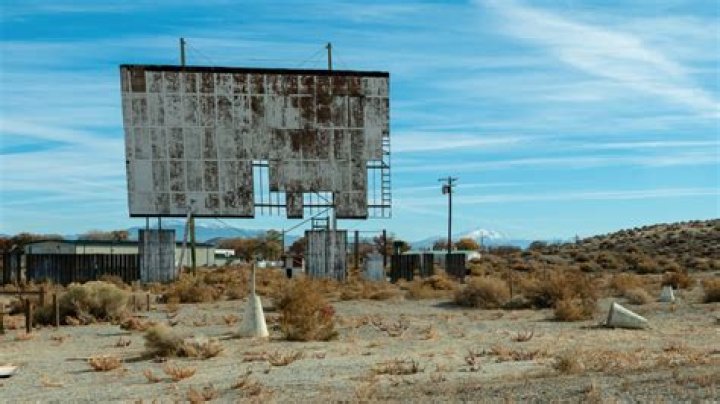

Studios and drive-ins have had a less-than-friendly business relationship. Since it's far cheaper to attend a drive-in, which only charges by the car and not by the head, revenue from them is drastically less than a traditional theater — a business which, over the years, has only continued to homogenize through mergers and acquisitions because their revenue has steadily declined too. There are very few local independent theaters anymore, so the corporate grip is strong all the way down the chain.
This has caused the studio industry to stop granting first-run licenses to drive-ins. That means these theaters are not permitted to run any film immediately upon release, and will only be granted license to run prints that have been used already in other theaters — and since hardly any of the few surviving drive-ins can afford to go digital (more on that in a moment), that means literal prints on celluloid. Film stock doesn't hold up well after being played dozens of times in one or even multiple first-run theaters, so the visual quality will suffer greatly with color fade and scratches.
No drive-in can possibly compete with today's multiplex sound system, either. Even at a rock-bottom price, without the addition of a unique gimmick experience that isn't so much about watching the movie — a good example is a drive-in theater that ran The Mist with timed fog machines as a "special effect" — the cost benefit isn't all that attractive to today's moviegoer. On top of that, it's getting close to impossible to get ahold of physical film prints at all.