
"Captain Marvel #16," which debuted in 1969, features Mar-Vell stuck in the Negative Zone thanks to his Nega-Bands. It wasn't until "Captain Marvel #17" that readers discover that, through the Nega-Bands, Mar-Vell can swap places with Rick Jones, thus freeing himself from the Negative Zone. Future "Captain Marvel" comics also make use of the Nega-Bands, making them a key part of the character's mythos.
In the Marvel Cinematic Universe, however, the Nega-Bands aren't technically associated with Captain Marvel. Instead, they're a major part of Kamala Khan's origins in the franchise. A family heirloom, Khan wields the bangles, only to receive superpowers from them. During the post-credits scene for "Ms. Marvel," Khan's bangles light up before she's whisked away and replaced by Captain Marvel. It remains to be seen if "The Marvels" will rely on the Nega-Bands which were prominent in those early "Captain Marvel" comics.
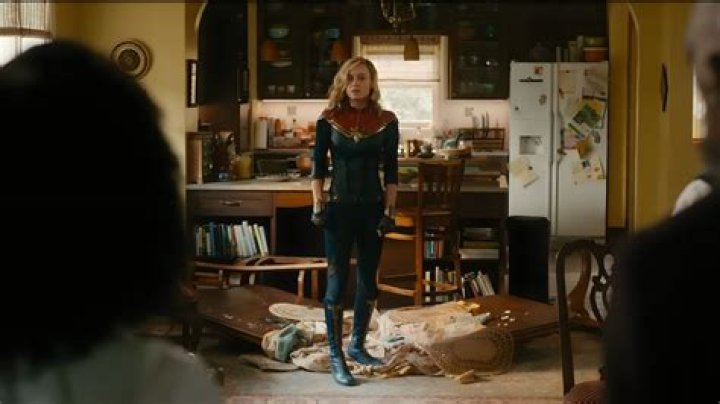
Executive Producer Mary Livanos remained coy about how exactly Photon, Captain Marvel, and Ms. Marvel are connected and able to swap places, but noted that all three characters utilize powers that are light-based. In the comics, the ability to swap places is treated as a strategic decision. In "The Marvels," it's explicitly clear that the ability is a hindrance, especially for Captain Marvel, who is used to working alone. "So, I think this is an incredible metaphor for learning how to be in a team," Larson said to EW about her character being forced to go from one place to another. "It's a very clear example that no one person can do it all," Larson continued, saying that a diverse team is needed to succeed.